You can see this in the Dock web interface (not the web configurator)
1 Like
I know version 4 and 6. Mine was as baker from Kickstarter and they are version 4.
Ralf
1 Like
Hardware EE here with 15 years of making various devices. The absolute max input voltage of the PAM2306DYPAA is 6.5 volts, nominal of 5.5 volts. That’s pretty low in my experience with something that can face the outside world, especially with a cable connection. Even with a 5 volt TVS diode or any other type of protection (other than a surge stopper with 60v fets) that chip is going to see voltage spikes over its absolute max due to various things. I don’t know the details of the circuit so just a theory.
A 5 volt, 6 foot long usb cable can easily cause a 20 volt transient voltage. I’ve personally seen as high as 60 volts if the input capacitance and cable inductance line up. Linear Tech (now Analog Devices) has an old app note on the topic. There are fancy circuits to help limit said spikes buts it’s way easier and cost effective to use higher voltage parts. It’s pretty easy to get a 12 volt spike past a 5 volt TVS diode. Given it’s a 5 volt input a 5.5-6v TVS should be used so it doesn’t start clamping too early (along to minimize leakage currents) so really looking at a max clamping voltage of 16+ volts.
TLDR, use shorter cables, connect cable then plug in wall power supply. Remote hardware has several questionable design choices.
1 Like
The PAM2306 is a widely used, well-established part—it’s been used in millions of Raspberry Pis. That said, your point about hot-plug transients and the limited voltage headroom is fair.
Our failure rate is currently around 1%. Even at that level, repairs take up a lot of our capacity. The next hardware revision will include an eFuse for additional input protection.
1 Like
Hello,
thank you for the description! I agree to spike warnings, there is not any ESD specification additionally in the datasheets.
On the other hand, if the Layout is properly done, the input caps should absorb and cut any spikes to appropriate levels. Which does not need to be valid for surges.
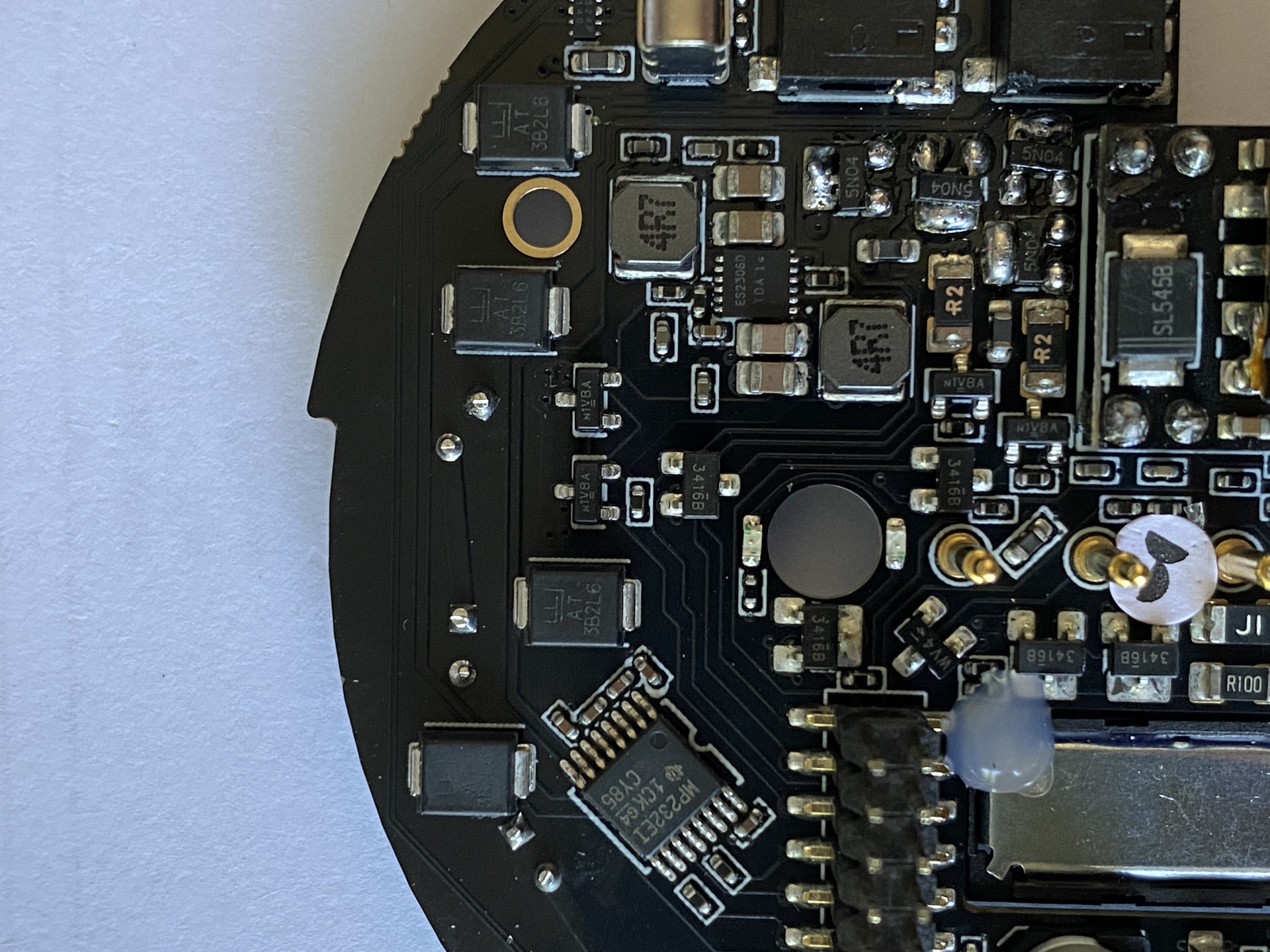
Last year I did the disassembly of the dock too, for improvement of the IR TX power.
The device in my dock is marked as:
ES2306D
TDA 1
I did not find this marking on the devices of Power Analog Microelectronics or later Diodes (Zetex?).
Diodes at least states some of the derivatives as NRND or even obsolete.
So, who is the real manufacturer? Where is the correct datasheet to be found?
Is it a good practice to use NRND parts?
Maybe widely used, but not free of problems everytime:
https://repair.wiki/w/Raspberry_Pi_Faulty_PAM2306_Repair
Interesting point, that GaN chargers led to fails two times.
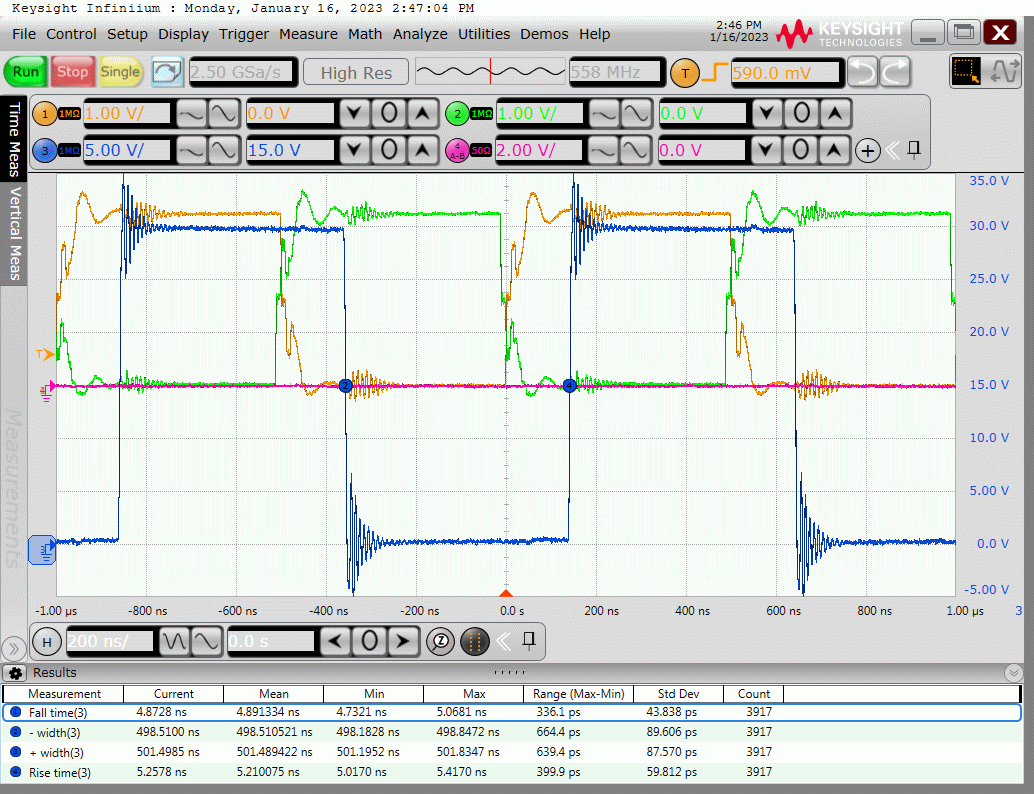
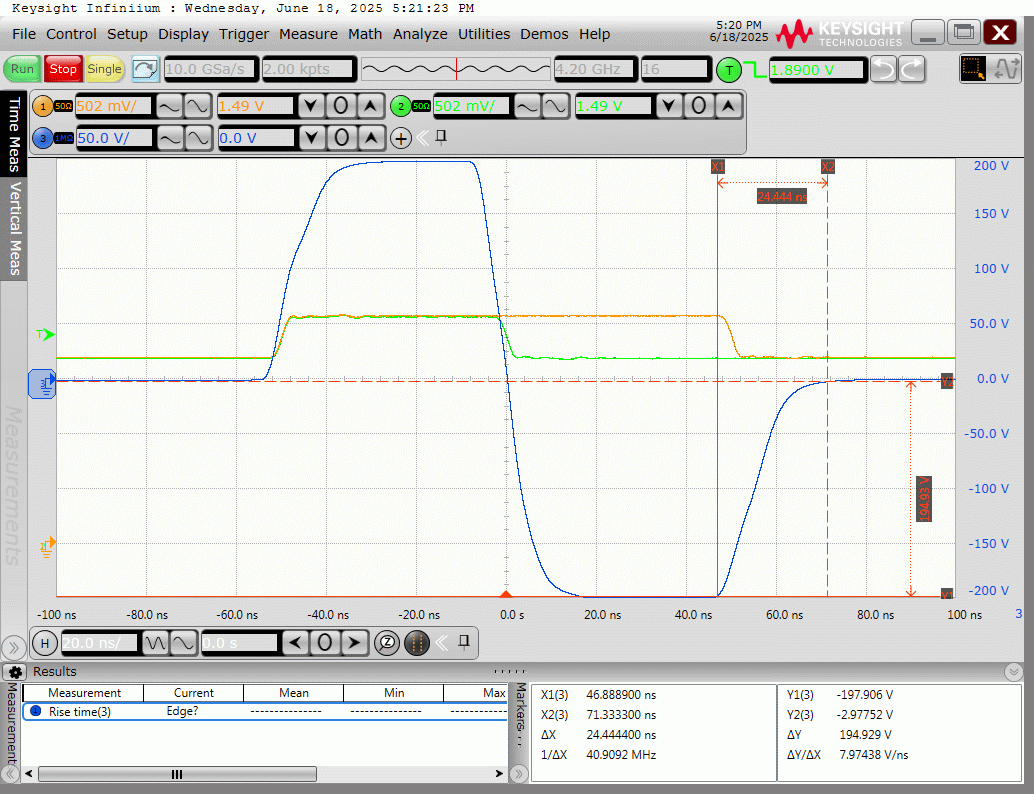
I designed very “fast” pulsers with GaN FETs. One has to keep the parasitic components in mind and to calculate with them. They create ringing together with the layout parasitcs, which has to be dampened.
Examples:
Damping is not sufficient (0V to 30V, the ringing will raise progressively with the switched voltage):
Better damping (-200V to +200V with virtually no overshoot):
Cheers,
tiki
edit: errors corrected.
1 Like